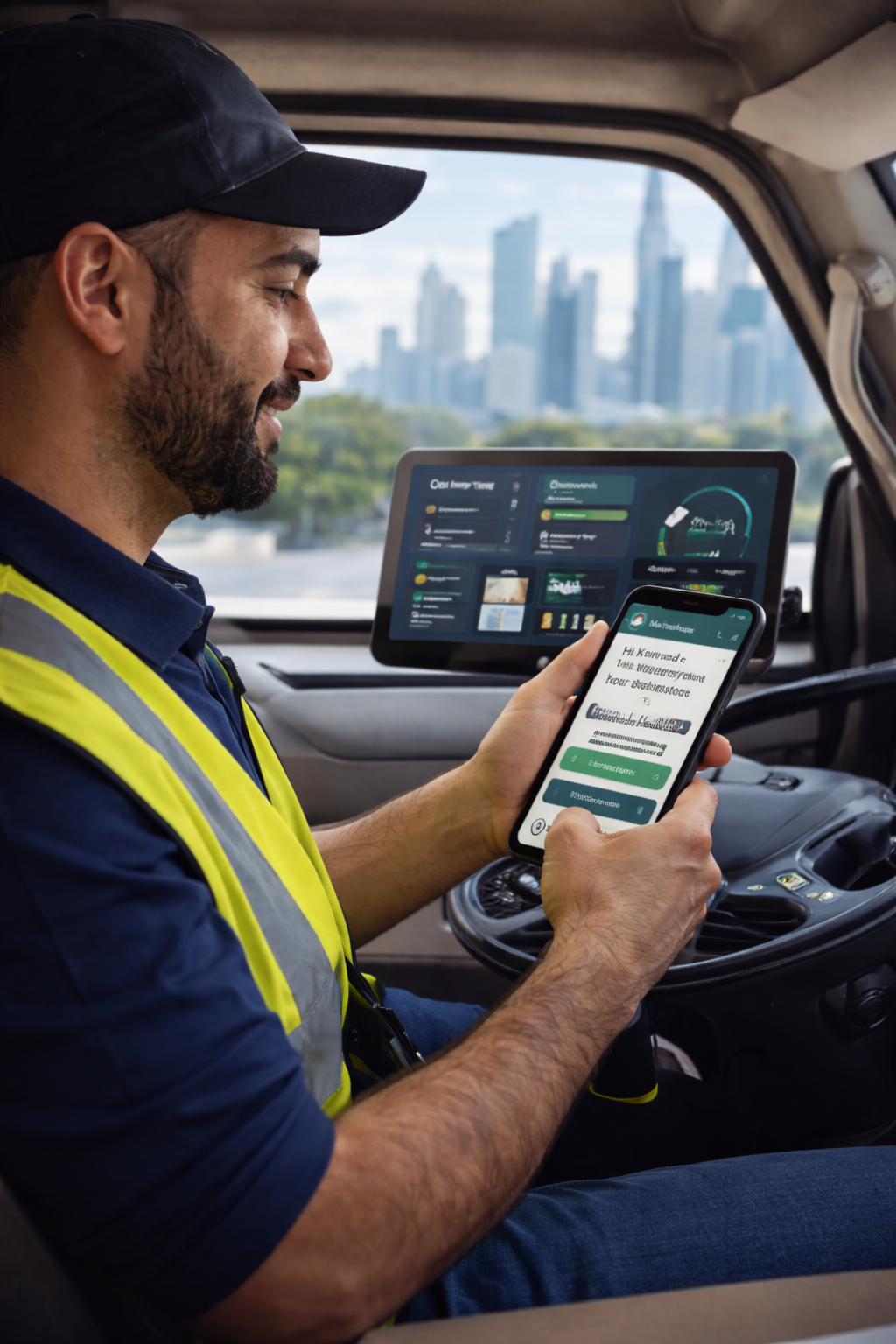
The Shift Toward Intelligent Logistics in Dubai
Dubai has evolved into one of the most strategically important logistics hubs in the world, connecting global trade routes across Asia, Europe, and Africa. As demand for faster deliveries and real-time visibility increases, traditional logistics systems are reaching their operational limits. Businesses are no longer able to rely on manual coordination, fragmented communication, or delayed customer responses. This shift has accelerated the adoption of AI-powered chatbots and automation platforms across the UAE logistics sector.
AI in logistics is no longer a future concept. It is actively reshaping how shipments are tracked, managed, and delivered. Companies in Dubai are increasingly leveraging automation to handle high volumes of customer interactions, streamline freight operations, and improve decision-making across the supply chain. This transformation is driven by the need for speed, accuracy, and scalability in a highly competitive regional market. Studies show that AI-driven logistics systems improve delivery efficiency, reduce operational costs, and enhance customer satisfaction across the UAE.
Real-Time Shipment Visibility and Customer Interaction
One of the most significant changes in logistics operations is the growing demand for real-time shipment tracking and instant communication. Customers expect continuous updates about their shipments, including location, delays, and estimated delivery times. AI chatbots are addressing this need by providing 24/7 automated responses that are accurate, consistent, and immediate.
Instead of relying on support teams to manually handle inquiries, logistics companies are deploying intelligent assistants that instantly respond to shipment status requests, route inquiries, and delivery timelines. These systems integrate with logistics platforms to deliver real-time data, reducing response times and improving customer trust. In a fast-moving logistics environment like Dubai, where timing directly impacts business outcomes, real-time visibility has become a critical service expectation.
Automation of Freight Operations and Workflow Optimization
Freight management in the UAE is becoming increasingly complex due to growing trade volumes and multi-channel logistics operations. AI-powered automation is transforming how logistics companies manage freight quote requests, pickup scheduling, and transit time calculations. Chatbots now collect structured data from clients, qualify shipment requirements, and route requests to the appropriate departments without delays.
This level of automation eliminates repetitive manual tasks and reduces operational bottlenecks. Logistics providers can process more inquiries, respond faster to clients, and maintain consistency in communication. In a competitive market like Dubai, where speed and efficiency directly impact revenue, automating these workflows allows businesses to scale without increasing operational costs.
Predictive Logistics and AI-Driven Decision Making
Beyond customer interaction, AI is playing a crucial role in optimizing backend logistics operations. Predictive systems analyze historical data, traffic patterns, and delivery conditions to optimize routes and improve delivery timelines. These systems enable logistics companies to make faster and more informed decisions, reducing delays and operational inefficiencies.
AI is also being used in areas such as customs documentation processing, demurrage calculations, and compliance verification. These processes, which traditionally required significant manual effort, are now handled with greater speed and accuracy. In the UAE, where cross-border logistics is a core component of business operations, these improvements significantly enhance overall supply chain performance.
Industry reports indicate that AI-powered logistics automation can reduce delivery times, improve route efficiency, and significantly lower fuel and operational costs. As the UAE continues investing in smart infrastructure and digital transformation, predictive logistics is becoming a foundational capability for modern supply chains.
Market Challenges and the Future of AI in UAE Logistics
While the adoption of AI in logistics is accelerating, it is not without challenges. High implementation costs, system integration complexities, and data security concerns remain key barriers for many companies. Additionally, transitioning from traditional systems to AI-driven platforms requires workforce training and organizational change.
However, the long-term outlook strongly favors automation. The UAE logistics market is rapidly evolving, with significant investments in AI, smart transportation, and digital infrastructure. Market projections indicate strong growth in logistics automation, driven by increasing demand for faster deliveries, real-time tracking, and operational transparency.
Businesses that adopt AI early are gaining a clear competitive advantage. They are able to deliver better customer experiences, reduce operational inefficiencies, and build scalable logistics systems that can adapt to future market demands. As Dubai continues to position itself as a global leader in smart logistics, AI-powered chatbots and automation platforms will play a central role in shaping the future of supply chain management.
The logistics industry in the UAE is no longer just about moving goods efficiently. It is about building intelligent, responsive, and customer-centric systems that can operate at scale. AI is at the core of this transformation, enabling logistics companies to move faster, smarter, and more strategically in an increasingly digital world. Chat365 supports that direction through website chat and WhatsApp automation designed for logistics and transportation teams that need faster shipment support and cleaner client communication.