Smarter Operations and Efficiency Across Hospitality Businesses
AI automation is significantly improving operational efficiency across hotels, resorts, and restaurants in the UAE. From front desk management to housekeeping coordination, AI systems help streamline repetitive tasks and reduce manual workload. Hotels can now manage guest check-ins, room allocations, and service requests with greater speed and accuracy, ensuring smoother day-to-day operations.
Approximately half of hospitality enterprises globally recognize AI as a key driver of operational efficiency, and this trend is clearly visible in the UAE market. AI tools can predict peak check-in times, automate guest communication, and optimize staff allocation. This reduces delays, improves turnaround time for services, and enhances the overall workflow within hotel operations.
Additionally, automation enables hopitality businesses to standardize service delivery without compromising quality. By reducing human error and improving coordination between departments, hotels can maintain consistent service standards even during high occupancy periods. This operational reliability is critical in a market like Dubai, where guest expectations are exceptionally high.
Data-Driven Revenue Management and Business Growth
Revenue management in UAE hospitality has become more advanced with AI-powered analytics. Hotels are now leveraging data from past bookings, seasonal trends, and real-time demand to adjust pricing dynamically. This allows businesses to maximize occupancy rates and maintain profitability throughout fluctuating travel seasons.
AI systems also help identify patterns in guest behavior, enabling hotels to design targeted marketing campaigns and personalized offers. Whether it is suggesting premium room upgrades, curated dining experiences, or exclusive packages, AI helps increase average revenue per guest. This level of personalization not only drives sales but also enhances the perceived value of the guest experience.
Furthermore, AI supports multi-channel revenue optimization by analyzing performance across booking platforms, direct websites, and third-party aggregators. In a competitive hospitality market like the UAE, where pricing strategies can directly impact booking decisions, AI driven insights provide a strong advantage in maintaining both competitiveness and profitability.
Sustainability and Smart Resource Optimization
Sustainability is becoming a core focus for hospitality businesses in the UAE, aligned with broader national environmental goals. AI automation is helping hotels reduce energy consumption, optimize water usage, and minimize waste without affecting guest comfort. These smart systems continuously monitor resource usage and make real-time adjustments based on occupancy and demand.
For example, AI can automatically regulate room temperature, lighting, and power usage depending on whether a room is occupied. This significantly reduces unnecessary energy consumption and lowers operational costs. Over time, these efficiencies contribute to a more sustainable and cost-effective business model.
In addition, adopting AI-driven sustainability practices enhances brand positioning. Modern travelers are increasingly conscious of environmental impact and prefer eco-friendly accommodations. Hotels that integrate smart resource management not only meet regulatory expectations but also attract environmentally aware guests, strengthening their market appeal in the UAE.
Personalized Guest Experience and Real-Time Service Automation
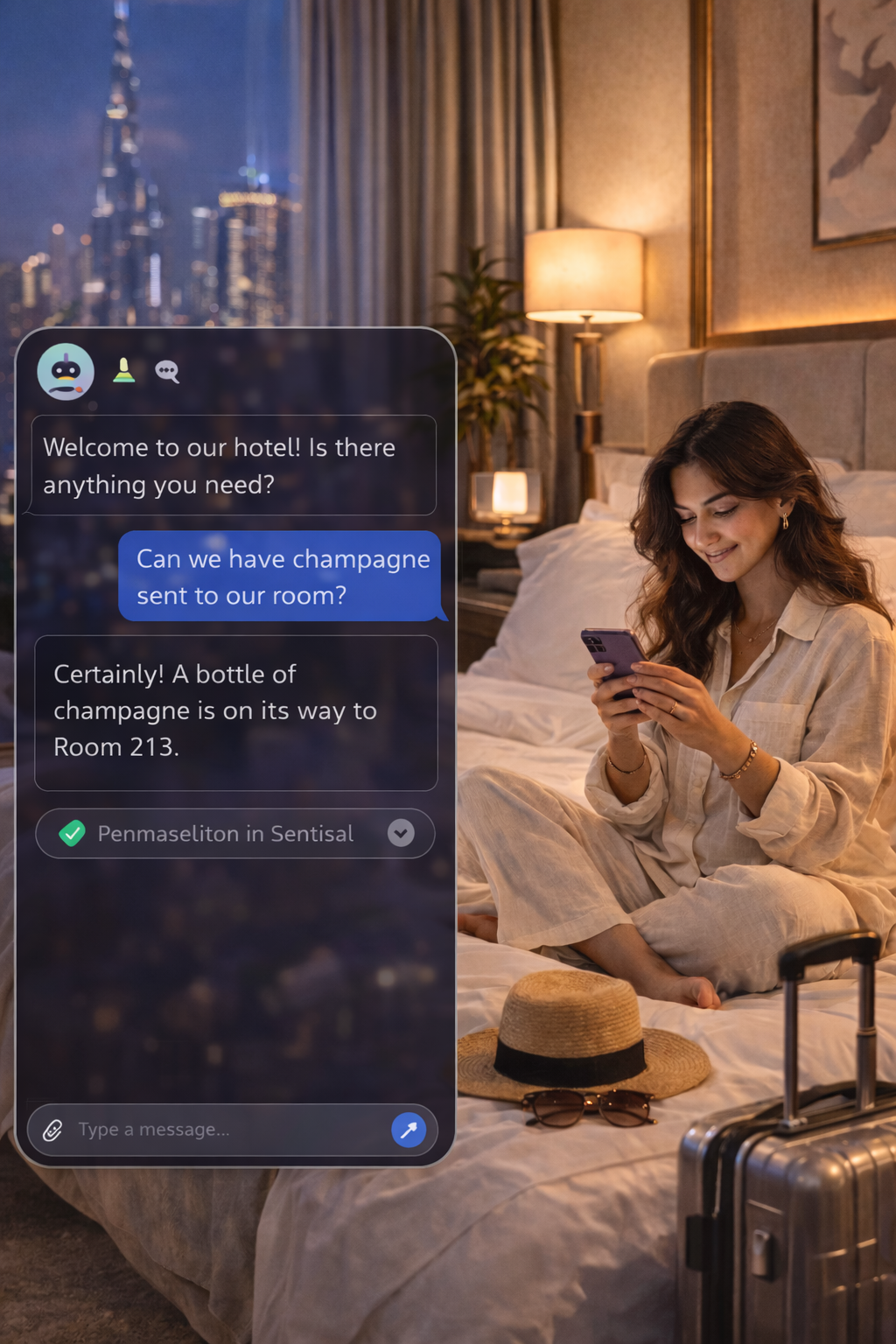
AI is redefining customer service in the UAE hospitality sector by enabling faster, more personalized interactions. AI-powered chatbots and virtual assistants are now handling guest inquiries, booking assistance, and service requests across websites and messaging platforms like WhatsApp, ensuring instant and consistent communication.
From the moment a guest considers booking to post-stay engagement, AI systems can provide tailored recommendations based on preferences and past behavior. This includes suggesting room types, dining options, local attractions, and additional services. Such personalization enhances the overall guest journey and increases satisfaction levels.
Moreover, AI plays a crucial role in handling emergencies and real-time communication. Hotels can use AI systems to send instant alerts, safety instructions, or important updates to guests during unexpected situations. This capability not only improves operational responsiveness but also builds trust and reliability, which are essential in delivering a premium hospitality experience in the UAE.