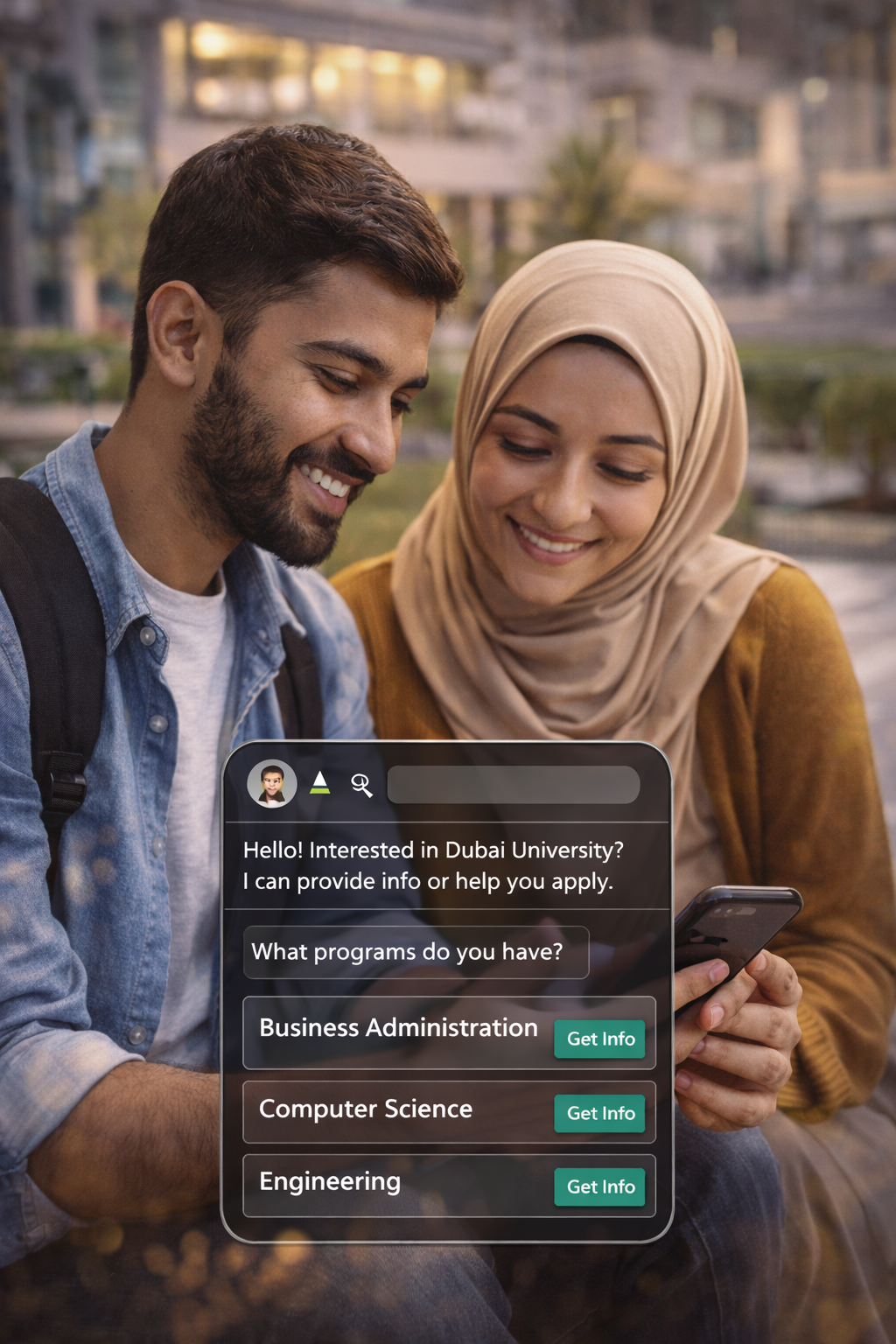
Personalised and Engaging Learning Experiences
One of the most powerful advantages of AI in education is its ability to personalise learning for every student. Traditional classrooms often follow a fixed curriculum, but AI systems can adapt content based on individual learning speed, strengths, and weaknesses. This allows institutions to offer a more flexible learning experience that supports better understanding and stronger academic progress.
For students in Dubai and across the UAE, personalised learning can have a direct impact on confidence and outcomes. Some students need more time and support, while others are ready to move faster. AI helps create a learning path that feels more relevant to each student instead of forcing everyone into the same model. This can improve performance, reduce frustration, and help students stay more involved in their studies.
AI also makes learning more interactive. Smart quizzes, simulations, conversational support tools, and adaptive learning systems can turn passive study into active participation. Students are more likely to remain interested when the system responds to their progress and supports them in real time. In a market where digital usage is high and students are already comfortable with technology, this kind of learning experience is becoming increasingly important.
Engagement matters not only for academic success but also for long-term retention. When students feel supported, understood, and guided, they are more likely to continue their learning journey with confidence. This is one of the key reasons AI-powered education tools are gaining attention in the UAE. They help institutions move beyond static teaching methods and offer learning experiences that feel more modern, connected, and student-focused.
Faster Communication Between Students, Parents, and Institutions
Education providers receive a high volume of questions every day. Parents ask about curriculum, fee structure, admissions, and class schedules. Students want to know about courses, eligibility, certification, and career opportunities. Working professionals may enquire about weekend batches, evening classes, or short-term programmes. If these questions are not answered quickly, institutions can lose trust and potential enrolments. AI automation helps solve this by providing a strong first-response layer.
With education chatbots in Dubai and AI-powered support systems on websites and WhatsApp, institutions can respond instantly to common enquiries. This reduces waiting time and improves communication for students and parents who want quick, clear answers. Instead of depending only on office hours or delayed callbacks, prospects can get the information they need immediately and continue their decision-making process faster.
AI automation also improves the quality of communication. Rather than sending generic replies, trained AI systems can answer common education-related questions in a structured and consistent way. They can collect details such as student grade level, programme interest, preferred campus, budget range, and intake preference before passing the conversation to an admissions team or counselor. This makes human follow-up much more productive because the basic context is already available.
For institutions, this means fewer missed enquiries and more organised student communication. For parents and students, it creates a smoother and more professional experience. In a city like Dubai, where service quality and response speed strongly influence decisions, education automation can directly affect student trust, counseling bookings, and final enrolments.
Reducing Administrative Burden and Improving Efficiency
Another major advantage of AI automation in education is operational efficiency. Teachers, support teams, and administrative staff spend a large amount of time on repetitive work such as grading support, attendance tracking, admissions follow-up, reminders, and routine student query handling. These tasks are important, but they also consume time that could be used more effectively for teaching, planning, and student support.
AI helps reduce this burden by automating routine tasks and creating more organised workflows. When institutions use AI for enquiry handling, communication support, and process automation, staff can focus more on higher-value responsibilities. Teachers can spend more time mentoring students and improving classroom engagement. Admissions teams can focus on serious applicants instead of repeating the same answers throughout the day. Support staff can prioritise cases that genuinely need human attention.
This improvement in efficiency is especially important in the UAE, where many education providers are balancing rapid growth with high service expectations. Schools and universities are expected to deliver a premium experience while managing large volumes of incoming communication. AI automation supports this by improving response time, reducing manual workload, and helping teams operate with better context across multiple channels.
Efficiency also shapes public perception. A faster and more organised institution builds trust more easily. Parents feel more confident when they receive timely and accurate information. Students feel better supported when communication feels smooth and accessible. In a competitive education market like Dubai, operational efficiency and communication quality are closely connected.
Preparing the UAE Education Sector for the Future
The UAE is already positioning itself as a leader in innovation, artificial intelligence, and smart infrastructure. Education is a central part of that long-term vision. AI automation does not only help institutions solve today's communication and workflow challenges. It also helps prepare the education sector for what students, parents, and employers will expect in the future.
By using AI in schools, universities, and training institutes, education providers can create a more future-ready environment. Students become more familiar with intelligent systems, digital tools, and modern learning formats. Institutions become more agile, data-aware, and responsive. Teachers and administrators receive practical support from technology without losing the human side of education. This balance is important because AI should strengthen the system around educators, not replace them.
There are still challenges that need careful attention. AI in education must be implemented responsibly, with focus on privacy, fairness, accuracy, and equal access. Institutions should avoid overdependence on automation and ensure that human oversight remains part of important decisions. These concerns are real, but they do not reduce the value of AI. They simply show that implementation must be thoughtful and well managed.
The long-term opportunity is clear. AI automation can help the UAE build an education ecosystem that is more responsive, more personalised, and more efficient. It can improve learning experiences, support teachers, strengthen student communication, and help institutions grow without losing quality. As demand for smarter education continues to rise, AI-powered education is becoming one of the most practical ways for education providers in Dubai and across the UAE to remain competitive and relevant. To see how this connects to the broader offering, explore the Chat365 education page.