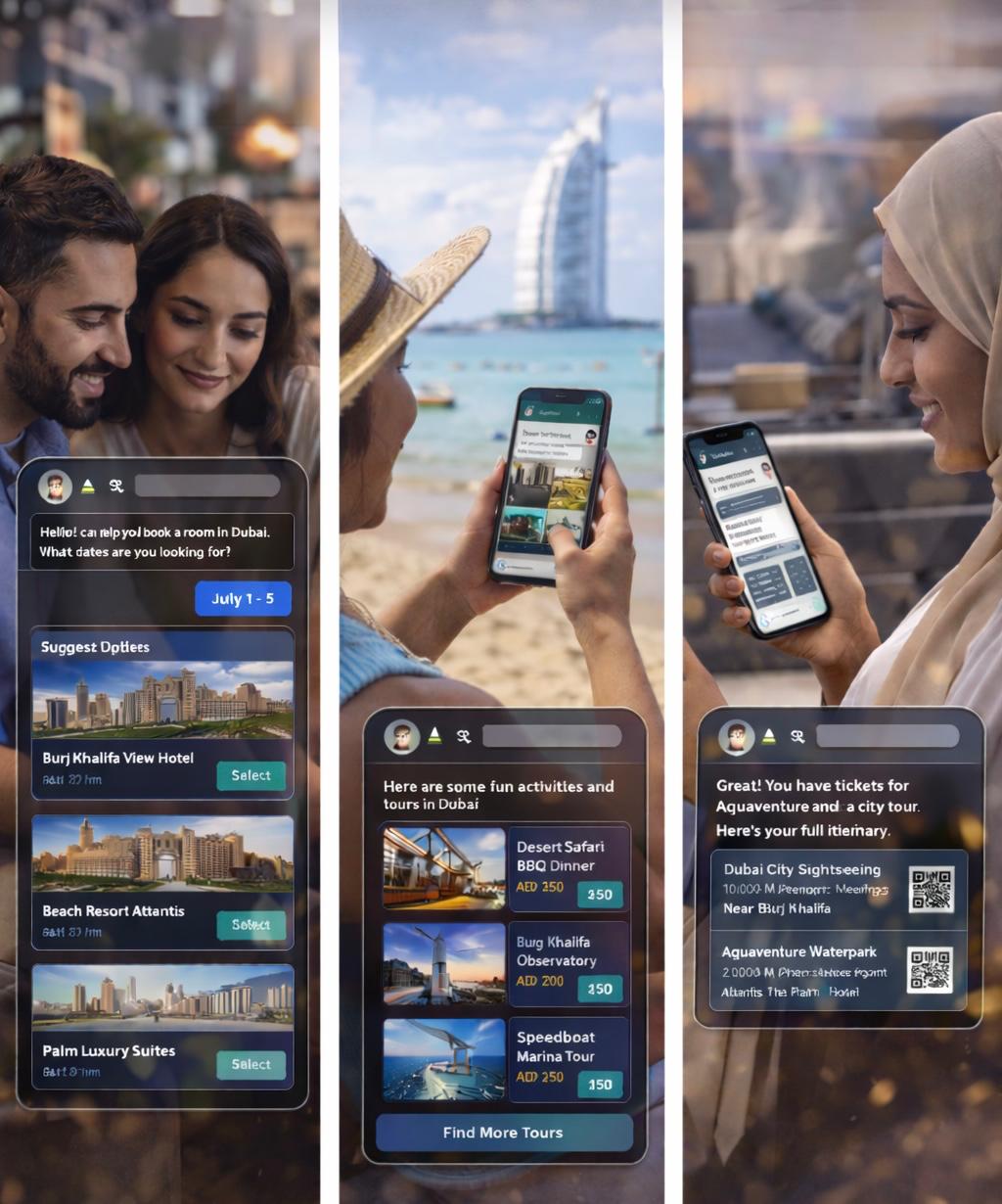
The Travel Market Has Recovered, but Customer Expectations Have Changed Faster Than Operations
The travel and tourism sector has entered a new phase where demand has returned, but customer behavior has evolved much faster than internal operations at many businesses. Travelers now expect instant answers, personalized recommendations, and a smooth booking journey across websites, WhatsApp, and mobile channels. The path from inquiry to booking is no longer simple. A single customer may compare destinations, ask about visa rules, review hotel options, check baggage terms, and explore multiple pricing ranges before making a final decision.
This shift is creating pressure across the industry. Many travel businesses still depend on manual follow-ups, delayed callbacks, disconnected sales workflows, and inbox-based enquiry management. That gap between what customers expect and how businesses respond is becoming a direct commercial problem. AI automation is no longer just a support layer added for convenience. It is increasingly becoming part of the revenue engine. Businesses that respond faster and guide users intelligently are more likely to capture high-intent leads, while slower competitors lose attention during the most important decision-making moments.
Why Travel AI Automation Is Becoming a Revenue Strategy, Not Just a Support Tool
A common mistake in the market is treating AI as only a chatbot feature. The real commercial value appears when automation connects conversations with qualification, recommendation, and conversion. Every travel enquiry contains decision signals. When a user asks for a family holiday package within a specific budget and travel month, they are already revealing intent, affordability, preferences, and urgency. AI can capture that information instantly and turn it into a structured opportunity.
This is why Travel AI Automation matters beyond customer service. Tour package recommendation based on budget and dates, flight and hotel inquiry pre-screening, and itinerary customization intake are not just convenience features. They are conversion tools. They shorten the path between curiosity and commitment. Instead of forcing potential customers to wait for a sales executive to manually review every message, businesses can deliver relevant responses in real time and keep the user engaged while interest is still high.
Travel decisions are often shaped by uncertainty. Many customers begin with questions, not commitments. They may not be ready to book, but they are ready to explore. This is where AI automation becomes strategically valuable. A well-designed assistant can answer baggage policy questions, offer visa requirement guidance by destination, explain package options, and suggest the next step without making the interaction feel generic. That continuity keeps the conversation alive and improves the chance of eventual booking.
Personalization Is Becoming the Core Competitive Advantage in Travel
The strongest businesses in travel are moving toward personalization because generic selling is becoming less effective. Today's customer expects recommendations that reflect budget, travel dates, destination interest, trip purpose, and travel group type. A honeymoon inquiry, a solo leisure trip, and a corporate group request should not produce the same experience. Yet many companies still rely on broad offers and manual interpretation, which slows response time and weakens relevance.
Travel AI Automation changes that by analyzing enquiry context at the first point of contact. Instead of replying with a standard message, the system can classify the request, identify the likely customer need, and present more suitable recommendations. This improves the customer journey while also helping the business focus on higher quality leads. AI-powered recommendations for clients are most effective when they reduce noise. The goal is not to overwhelm users with too many choices. The goal is to guide them toward the right choices faster.
This has a direct impact on strategic marketing and engagement. Travel brands are no longer competing only on price or destination access. They are competing on responsiveness, relevance, and how easily a customer can move from interest to action. Personalized conversational journeys help businesses collect richer intent data, segment demand more effectively, and nurture prospects with better timing and better offers.
The Booking Journey Is Becoming More Fragmented, and Automation Helps Bring It Back Under Control
The booking process has become more fragmented over time. A traveler may discover a package through search, ask questions on WhatsApp, revisit the website later, compare prices on another platform, and then request clarification before making a payment. Without automation, these fragmented touchpoints often create lost leads, inconsistent responses, and duplicated effort across teams.
Automating booking processes helps travel businesses build continuity across that journey. An AI system can manage flight and hotel inquiry pre-screening, capture itinerary customization needs, send booking confirmation and pre-travel reminders, and coordinate group booking requests without requiring constant manual effort. This not only improves speed but also reduces operational leakage. Businesses are better able to track who enquired, what they asked for, how ready they are to book, and when a human agent should step in.
This operational continuity is especially important in travel because timing matters. Many bookings are won or lost based on how quickly a business responds with clarity. If a user waits too long for an answer on pricing, baggage policy, or visa requirements, they often move on. AI automation protects against that delay. It ensures the first response is not only fast, but also useful.
Improving Customer Support Without Increasing Team Overload
Customer support remains one of the biggest pressure points in travel operations. Questions about changes, confirmations, baggage rules, travel documents, group coordination, and add-on services consume a large amount of time. These interactions are important, but many of them are repetitive. When support teams spend too much time on repeated queries, service quality often drops during peak periods.
Travel AI Automation allows businesses to manage this support volume more efficiently. Routine interactions can be handled instantly while more complex or sensitive cases are escalated to human staff. This improves customer satisfaction because travelers get timely information, and it improves internal efficiency because teams are not overloaded with repetitive tasks. A personal AI assistant for trip planning and booking support is useful not because it replaces people, but because it removes unnecessary friction from the parts of the journey that can be standardized.
This is also where travel insurance upsell becomes more practical. Instead of relying only on manual sales follow-ups, automation can introduce insurance options at the right stage in the conversation, alongside relevant travel context. The same applies to pre-travel reminders and policy lookups. When these touchpoints are timely and contextual, they support revenue and customer experience at the same time.
Predicting Travel Trends and Pricing Opportunities Through Better Enquiry Data
One of the less visible advantages of AI automation is the quality of business intelligence it creates. Every interaction becomes a source of structured data. Travel companies can identify which destinations are being asked about most often, what budget bands are becoming more common, which travel months generate the highest intent, and where customers hesitate before booking.
These patterns can support predicting travel trends more effectively. Businesses gain earlier visibility into demand changes and can adjust offers, staffing, promotions, and inventory priorities with better confidence. This also contributes to optimizing pricing strategies. Pricing in travel is highly sensitive to timing, demand, perceived value, and package structure. AI does not remove the need for human pricing judgment, but it helps businesses detect demand signals faster and respond more intelligently.
The operational value here is significant. Businesses that understand their enquiry data at a deeper level can shape marketing campaigns with more precision, improve package design, and identify which services need clearer communication. In that sense, AI is not only answering customers. It is also helping the business understand the market more clearly.
Streamlining Operations With AI Integration Across the Travel Funnel
Streamlining operations with AI integration is one of the most practical and immediate benefits for travel businesses. Automation can connect lead capture, qualification, customer support, follow-up, reminders, and upsell logic into one consistent workflow. That consistency is important because many businesses lose efficiency not from lack of leads, but from disconnected handling of those leads.
When systems work together, the customer journey becomes easier to manage. Enquiries are collected in a structured form, recommendations are more relevant, follow-up is faster, and handoff to human teams becomes more intentional. This reduces missed opportunities and gives management clearer visibility into how demand is moving through the funnel.
The strongest travel brands will be the ones that use AI to improve both speed and quality. They will not rely on automation just to appear modern. They will use it to create better personalized journeys, improve customer support, sharpen strategic marketing, automate booking processes, and support more confident decision-making across the business.
Travel AI Automation Is Reshaping How Modern Travel Businesses Compete
The travel sector is entering a period where digital responsiveness, personalization quality, and operational speed are becoming major competitive factors. Businesses can no longer depend only on attractive packages and manual service workflows. Customers expect immediate assistance, relevant answers, and a planning experience that feels organized rather than fragmented.
Travel AI Automation answers this need by bringing together intelligent recommendation, operational efficiency, and customer support continuity. It helps businesses respond faster, guide users more effectively, and convert more enquiries into real bookings. From tour package recommendation based on budget and dates to visa guidance, baggage lookup, itinerary intake, group booking coordination, and trip planning support, the value of automation is now connected directly to business growth.
For Chat365.site, the positioning should focus on more than just chatbot functionality. The real message is that travel businesses need an automation layer that understands user intent, supports decision-making, and reduces the manual workload that slows down sales and service teams. In a market where customer attention is short and expectations are high, that capability is becoming a core requirement rather than an optional upgrade.